Knowledge Center
Learn Night Vision.
Know Your Equipment.
The most comprehensive night vision resource built by a manufacturer. Education, product intelligence, white papers, and media, all in one place.
Knowledge Center
The most comprehensive night vision resource built by a manufacturer. Education, product intelligence, white papers, and media, all in one place.
Night Vision Basics
Whether you're buying your first system or evaluating options for a program, start here. The fundamentals, without the marketing spin.
Our NVG education series is underway, led by the engineers and assembly crew who build the housings. Episodes will cover core technology, construction, maintenance, and field use.
Until release, the Knowledge Booklet below is the complete technical foundation.
The complete guide to night vision technology, from LLI. Available as an interactive flipbook, flat view, or downloadable PDF.
LLI Products
Deep dives into every LLI housing, accessory, and configuration option. Understand what you're buying and why it's built the way it is.
Everything about the flagship. Materials, manual gain system, modular power, split-to-mono capability, and configuration options.
The monocular that grows with you. How it works standalone and how it integrates into the MH-1 binocular system.
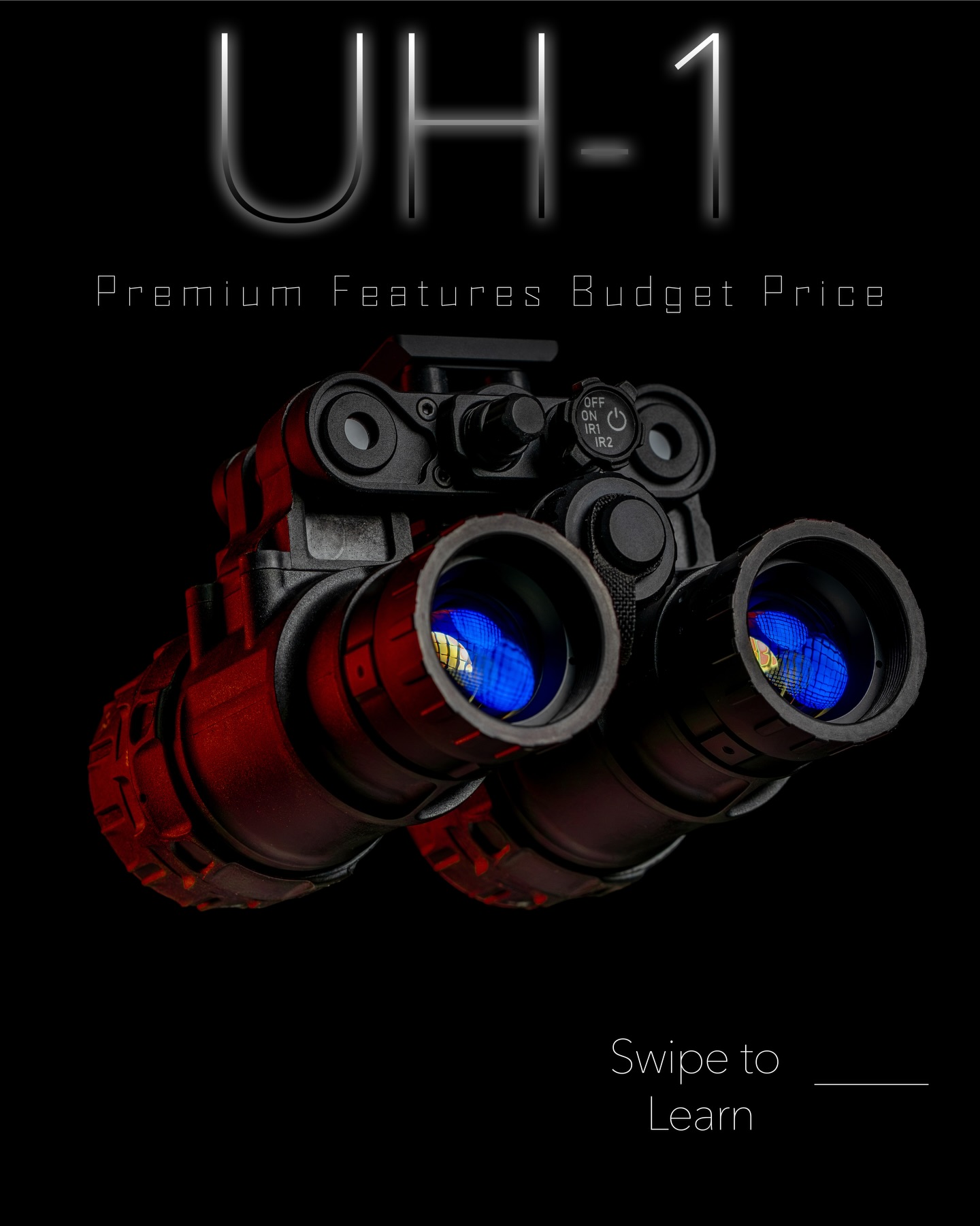
How the UH-1 delivers the MH-1 feature set in a polymer build. Who it's for and how it compares.
Two platforms, different materials, same ecosystem. A direct comparison to help you choose the right housing.
How the LLPA expands your field of view from 40 to 69 degrees. Installation, detent positions, and real-world use.
UBC, standalone port, AA cap, Fischer external power. Every power option in the LLI ecosystem explained.
Complete specifications, housing details, accessory guides, and comparison charts for every LLI product.
Topics In Discussion
In-depth analysis on night vision acquisition and the U.S. industrial base. Each paper makes a case to government procurement officers, program managers, and defense industry professionals. Read in your browser or download the PDF.
Why Configurable Night Vision Architecture Is a Tactical and Logistical Imperative
Why Proprietary Night Vision Architectures Are a Procurement Risk the DoD Can No Longer Afford
How a Two-Vendor Market Is Failing U.S. Ground Forces
Media
Product overviews, field footage, convention appearances, and behind-the-scenes content from YouTube, Instagram, and Facebook.
YouTube
Booklets
Comprehensive guides available as interactive digital booklets with page-turn navigation, flat-view reading, or downloadable PDFs for offline reference.
Complete specifications for every LLI housing, accessory, and configuration option. System overviews, spec tables, comparison charts, and housing designs. 16 pages.
The complete guide to night vision technology. How image intensification works, tube specifications decoded, generations explained, maintenance best practices, troubleshooting, and a full glossary. 28 pages.
Training
Test and develop the real skills that matter in night vision operation. These exercises simulate the same perception challenges operators train for in the field.
One of the most critical — and most undertrained — skills in night vision operation is judging distance. Under NV, depth perception is significantly reduced. You're viewing a flat, monochromatic image with limited contrast, which compresses the visual cues your brain uses to estimate range. Objects often appear closer than they actually are, and terrain features that help with depth during daylight become ambiguous in P43 green.
Observation training built around what NV operators actually scan for — not random puzzle differences. Each scene shows two surveillance frames taken minutes apart, and every change has tactical meaning: IR markers visible only under NV, repositioned assets, new presence at the perimeter, signs of recent activity. The ability to detect subtle changes between observations is a foundational skill in night operations, counter-surveillance, and overwatch.
Common Questions
The questions buyers ask most before stepping into night vision — answered directly by the people who build it.
Next Step
Visit our retail store, find a distributor, or configure your own system.