The Dispatch · Durability
We Dropped an MH-1 From 200 Feet. Here's What Happened.
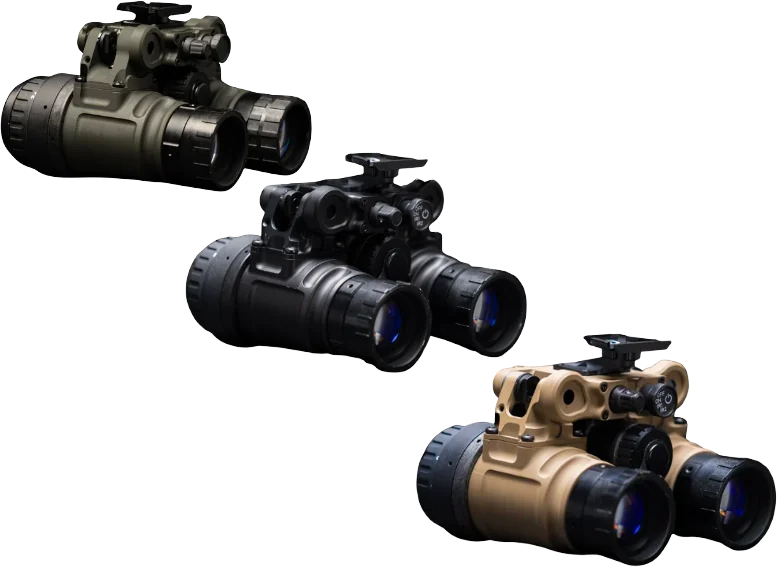
The Dispatch · Durability
The drone stopped climbing at 200 feet. Hanging underneath it was an MH-1, and there was nothing left to do but let it go.
From that height, a falling object reaches the ground in about 3.5 seconds. Ignoring air resistance, it would be moving at about 77 mph when it got there. Air resistance takes some of that speed away, but it's still a long way down for a precision optical system.
We make these housings, so we know exactly what's inside them. We dropped one anyway, because the people who wear our systems don't get to choose how hard they come down.
Step 1 · 5 Feet
Before we put anything under a drone, we started with something simpler: a 5-foot drop onto concrete. We took a UH-1 and two competing housings and dropped each one from the same height.
The UH-1 came through with no blemishes and no issues. Both competing housings cracked at the arm, near the bridge. That isn't a quick fix. It's a complete RMA repair.
That was one drop of each housing, not a lab study. But it told us what we wanted to know, and it gave us the confidence to go a lot higher.
Step 2 · 200 Feet
For the drone test, we started at 50 feet and worked our way up to 200. We chose a grass field as the landing surface because of the height involved.
Results
We walked out, picked it up and went through it. We found two things:
That was it. No new blems in the tubes, and nothing else to report.
Engineering
A housing is only as strong as its weakest point. When it hits the ground, the force travels through the structure until it finds that point. On a binocular housing, that's usually the arm, right where it meets the bridge.
Material matters, but it isn't the whole story. Housings across the market use mixes of aluminum, titanium and polymers. What matters is how much material is left at the point that takes the load.
Many designs run wiring through the arms. That wiring needs a channel, and the channel has to come from somewhere, so the arm walls get thinner. We don't run wires inside our arms. We wire our devices with durability in mind, so our arm walls don't have to give up that thickness.
Then we match the material to the job:
About a third lighter than aluminum and excellent at damping shock and vibration. That matters on your head all night, and it matters when the system hits the ground.
Used at the hinge points and other high-stress hardware, where strength and fatigue resistance count the most.
Selected specifically for impact performance and reinforced with a rigid metal bridge backer at the hinge assembly. Not all polymers behave the same way when they hit concrete, and ours is built to flex and return to shape.
Protecting the housing is only half of the job. Everything we do to manage impact also protects what's inside it, including the tubes.
What's Next
This was our own stress test, not a certified lab or MIL-STD test. It was a grass field, not a test facility. So we're going higher, and we're going to try different landing surfaces.
The odds of you dropping your system from a drone are pretty low, and we don't recommend it. But if something ever does happen to it, our lifetime transferable warranty has you covered, even if you bought your system secondhand.
That's what it means to us. We test our gear the way we'd want it tested before we bought it ourselves.
Keep Reading
Next Step
Visit our retail store, find a distributor, or configure your own system.